
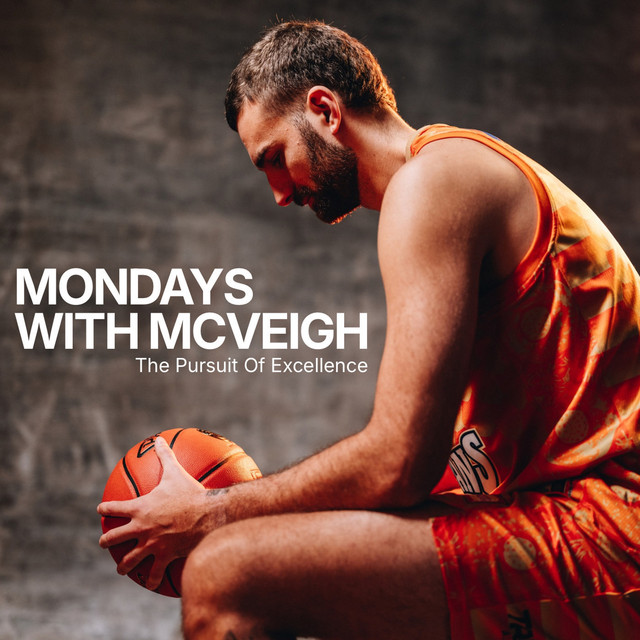
Listen to The Podcast Above
When the Houston Rockets didn't sign me back they made the reason why very clear. "We don't know which position you would guard." Those words felt like a dagger in everything I had been working towards. This also wasn't the first time my defence had failed me. Growing up I didn't make a state team or an Australian team because they told me I wasn't strong enough to play defence at the next level.
That same message was repeated to me at college where my coach told me I wasn't allowed to wear black shoes because they made my feet look too slow, he only let the manager give me white Adidas and took the black shoes away so that I wouldn't give the opposition confidence.
I have always felt anger towards coaches who say that defence is just effort. Every day of my career I've tried my hardest on the defensive end. I run as fast as I can, I slide my feet as quickly as I can and I play as physical as I can. But if it was just as simple as trying harder, I would still be in the NBA guarding the best players in the world. But I'm not.
I was sitting in the sauna with Matthew Dellavedova telling him about how I needed to improve on the defensive end. He offered a simple idea, "create a plan and go make it happen." For the last decade of my career I'd been working on the offensive side of basketball, creating theories on shooting, dribbling and manipulating defences. It was time to take the same principles that I had been applying to my skill development on the offensive end and apply them to defence.
The first thing I did was with Cody where we created a vision of what I wanted to be like as a defender. We asked the question, if I couldn't fail what would I aim for. I want to be a pest, to scram and make plays, to lock down on ball and to fly around and be aggressive. My vision is to dictate, dictate, dictate. I wrote it in my notes and started to read it every day. This vision idea came from when I wanted to learn how to be clutch, using the "I make big shots" mantra.
We then started exploring how to find joy and curiosity on the defensive end. This was done by targeting the limiting beliefs and fears I had about myself and what was possible.
I believed that I couldn't become a great defender because I wasn't a top tier athlete. I don't move like Amen Thompson or slide my feet like Patrick Beverley. But when Cody and I challenged that belief, we found evidence to support the opposite. Matthew Dellavedova, AKA the Steph Curry stopper, isn't a great athlete relative to his competition. Dillon Brooks on the Rockets was slower relative to his matchups but night in and night out he made the other team's best player's life miserable.
I told myself it was impossible to be the go to offensive guy and a lockdown defender because of the conditioning it requires in your legs. "I'm just not capable of that," I'd say to Cody. I would save my legs to perform at my best. There was no way I could work on defence in warm ups or hit plyos in the gym while going out there and playing 30+ minutes.
This self talk was the years of anger and frustration I had at my body for moments that it had let me down. From when I didn't make teams to when I was getting blown by in the 4th quarter because I was tired or when at the Australian Institute of Sport they would tell me I was skinny fat because of the skin fold tests.
I had to rewire these beliefs with daily work. I talked with my trainers to help create a hard warm up, where I hit max explosive reps and pushed my legs to fatigue. Starting these warm ups brought on more fears. "You won't play well, you will be fatigued, your legs will give out in the 4th." I noticed these inner voices without judging them and put my focus and attention back on the exercises. At first, in some games, I did get extra tired and missed shots short. I thought about quitting and going back to what felt safe. But over time I proved to myself that I was capable of building elite shape.
Fears, doubts and worries continue to arise every step of this defensive journey and it's the skill of navigating those that helps me continue to improve. Just navigating the fear of not belonging on the defensive end helped me slow the game down and guard without my jittering feet.
Improving a skill is a lifelong process and I only started dedicating time to the defensive end at the age of 29. There are going to be players out there vastly superior to myself defensively and if I was to compare myself to them then all joy would be ripped away from what I'm doing. But not comparing is freaking hard, so I put in a system to help.
I got Freddy (my trainer) to pull up last season's worst defensive clips, and we watched them all together, not just to search for ways to improve but to set a baseline for who I was. After each game now we watch all the areas I've improved and acknowledge all the growth I've made. I only compare myself to who I was yesterday.
Instead of making mistakes and stressing about sitting in the film room biting my nails and shaking my right leg as I watched it back with the team, I would make a play and get excited about watching it back with Freddy the next day. Pressure had turned to play.
Joy and curiosity open the mind to growth but I still required knowledge to bite into. After 10 years of pro basketball I understood the basics of defence and what the end result should look like, for example, the ability to fight over an on ball screen and navigate close outs not letting the offence get middle, but I wasn't able to do these at a high level, so I had to find players and coaches who understood the details in how to get those jobs done.
I got my brother Lloyd to reach out to a bunch of different coaches and players to do film study with them. He cut up his own film and paid them to review it with him. After the sessions Lloyd and I would jump on a call and he would yap about the importance of arriving on the catch and making plays at the ball.
I went to the Australian Boomers camp and asked Dyson Daniels about defence, how he thought about making plays, what he gave up and how he tried to limit guys.
Before every workout Freddy would show me NBA and NBL film on players executing what we were trying to do at an elite level. I was seeking knowledge from mentors and my peers through film and conversation.
I then had to put this information to the test.
I knew you don't learn how to shoot by just making shots. I became a great shooter by missing and adjusting, failing and learning, over and over again.
Freddy, Lloyd and I would design our workouts to put me into the toughest possible defensive positions I could be in. I would do long close outs or play defence with my hands above my head. Then we would discuss what it felt like, what it looked like and how we think I could do it better. That's when the real improvement happens, in those conversations around the workout. We would also record our workouts and watch the clips back later that day. Everything was about learning as much as we could as quickly as we could and this is done by failing as much as possible and learning from those mistakes.
But improving a skill isn't this overnight fun experience. It's messy, ugly, uncomfortable daily work.
Lloyd and I designed a banded workout before practice to improve our reactionary footwork. We hit our slides and tap our toes on the hardwood. It's boring, tedious and hard. But we do it every day. We play half court one on one and design defensive drills in our daily workouts instead of just getting the coaches to play defence on us. We beat each other up, we are more tired in practice and we get less offensive reps. This is the process.
But our approach to defence has become a daily habit, and it's in that habit that we improve.
There is no magic drill or exercise that we do that gets us better at defence, it's our small arguments about what the day should look like, Lloyd calling me soft when I say I'm too sore to compete or the days when we do technique drills instead because we are too sore to go hard that makes us get better. Our one on one battles are fierce and the conversations in between are loving. Our drills change day to day and we slowly improve them.
I am no defensive master by any means yet, but last night I was wearing black shoes that would make my college coach sick, while I picked up full court and got a steal leading to a layup. I felt joy and excitement out there in a space that has only caused me fear for years.
