
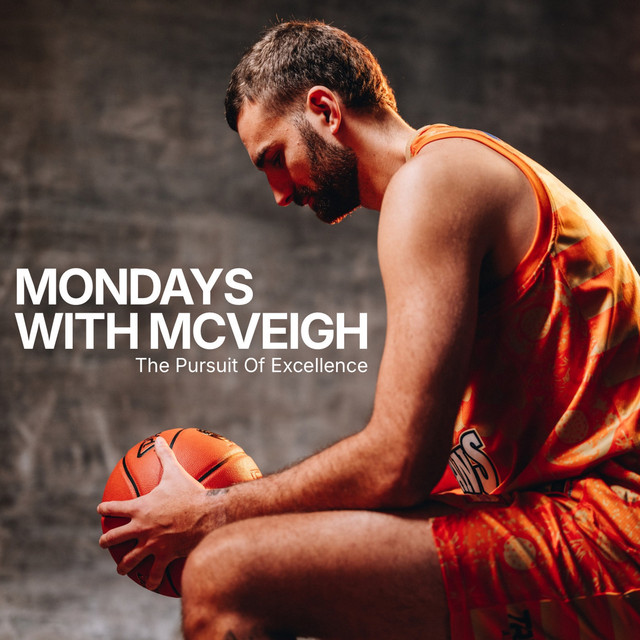
Last week, I scored 47 points.
A career high.
Growing up, all I ever dreamed about was getting buckets. Making tough shots. Feeling unstoppable.
I replayed the one Michael Jordan game I had on tape — 69 points — and wished I could shoot like him. I remember sitting in a college math class watching Chris Goulding drop 50, completely stunned. It felt mythical. Like something reserved for a different level of player.
So standing there after the game, looking at the stat sheet — 47 — felt surreal.
To score at the professional level takes skill, physical power, and a high level of basketball IQ. Getting buckets isn’t easy.
But to score 47?
That requires something else.
Five days before the game, my first child was born.
The commentators called it the dad game.
Last year, Luka Dončić had a 40-point triple-double in his first game as a father. So I started wondering — was there something to that? Some kind of magic?
Or was it something deeper?
Flow
Sports psychologists would call what I experienced flow state.
The clearest voice on flow is Mihaly Csikszentmihalyi, a psychologist who spent decades studying moments when people perform at their absolute best.
Flow, in simple terms, is the state where:
action and awareness merge
self-consciousness disappears
time distorts
the task feels effortless, but fully demanding
You’re not thinking about outcomes.
You’re not narrating yourself.
You’re not judging each moment.
You’re just… doing.
Csikszentmihalyi found a few consistent conditions that make flow more likely:
Challenge matches skill — not too easy, not overwhelming, right on the edge.
Clear goals — you know the task, moment by moment.
Immediate feedback — you feel instantly what works and what doesn’t.
Deep presence — attention anchored in the now, not drifting backward or forward.
Flow isn’t something you summon.
It’s something you allow.
That night, the game slowed down.
Shots let go without hesitation.
Reads appeared early.
The rim became an ocean.
I wasn’t trying to score 47.
I was responding to what was in front of me.
Pure flow.
But Why That Night?
A week earlier, my wife went into a 36-hour labour.
During that time, the outside world disappeared.
No phones.
No noise.
No distractions.
Just the two of us.
I watched her show courage, patience, and grit — the kind of qualities people try to learn from books but rarely experience firsthand. She brought life into the world.
Then our son arrived.
For days after, we did almost nothing.
No TV.
No music.
No scrolling.
From 7 pm to midnight, he would lay on my chest. He’d breathe. I’d match it. Slow. Steady. Quiet.
My wife slept next to me.
We just… were.
No agenda.
No improvement plan.
No performance goals.
Presence, without effort.
I’d spent more time in true, uninterrupted presence that week than I had in years.
And presence is the doorway to flow.
The Practice Behind the Moment
For the past five years, I’ve practised mindfulness almost every morning. Ten to fifteen minutes. Sitting. Watching the breath — not controlling it, just noticing.
That practice trains me to come back.
Back from replaying past mistakes.
Back from worrying about future ones.
I wouldn’t be able to perform at the level I do without it.
Because:
Flow requires attention.
Attention requires presence.
Presence requires practice.
This past week, presence wasn’t a practice.
It was my life.
And maybe — just maybe — that’s why the game opened up the way it did.
The Real Lesson
Flow isn’t about being hyped.
It isn’t about confidence.
It isn’t about emotion.
It’s about quiet alignment.
Mind on the task.
Body ready.
Ego offline.
The fastest way there isn’t by doing more.
It’s by being still long enough for everything unnecessary to fall away.
This week reminded me of that.
And if there’s one thing I’ll keep chasing, it isn’t nights like 47 points.
It’s the stillness where I find peace.