
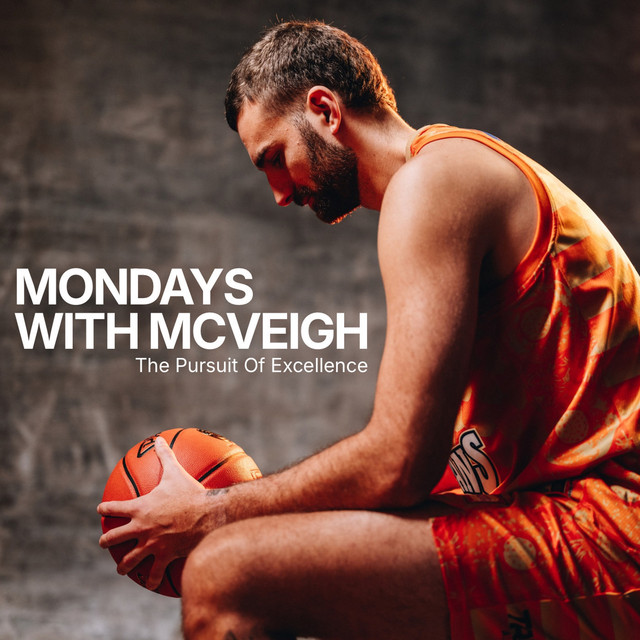
At 21 years old, sitting on the bench in college, I thought my dream of playing in the NBA was over.
Each night, I repeated the same story to myself:
“No matter how hard I work, I wasn’t born for the NBA.”
I felt helpless.
That belief broke me. I dropped out of college and moved home.
Luckily, I stumbled across Mastery by Robert Greene — and it convinced me to keep going.
Not because it filled me with belief.
But because it taught me a mandatory skill for chasing big dreams:
The ability to zoom out and commit to a long-term vision.
The Wrong Perspective
Growing up, I had no long-term view.
I needed to be great now.
I compared myself to players ahead of me.
I resented people who were better.
I judged myself daily based on performance.
Every game felt like life or death.
When I played well, I was on top of the world.
When I played badly, everything collapsed.
My inner dialogue was simple and brutal:
“If I don’t succeed today, I’m a failure.”
That short-term mindset created constant pressure, emotional swings, burnout, and moments where I hated the game and myself.
It wasn’t sustainable.
And it wasn’t helping me improve.
The Apprenticeship Model
I can’t undersell the importance of Mastery for me.
Greene writes that throughout history, there’s been a consistent 5–10 year apprenticeship phase before mastery emerges.
Blacksmiths studied for years before crafting weapons.
Doctors train for a decade before operating independently.
Mozart composed relentlessly for years before producing his great work.
Einstein spent nearly a decade in thought experiments before publishing relativity.
Edison self-educated for years before becoming an inventor.
Mastery takes time.
Dreams don’t happen overnight.
My basketball apprenticeship began at 15 when I moved to a boarding school.
From 15 to 21, I worked every single day. But it was naïve to think 6 years of average work was enough to compete with the best in the world.
Greene helped me see that making it to the NBA might take 10 years, and 1000s of lessons learnt.
That reframing gave me hope.
I zoomed out.
I stayed the course.
Proof in the Details
When I became a pro, I knew I needed a reliable go-to dribble move.
I loved the between-the-legs move.
Every day, I worked on it — shooting, finishing, and drilling that move.
For years, it never translated to games.
I started to believe a theory:
Maybe players can’t change how they play — only sharpen what they already do well.
I asked myself,
“Did I waste seven years working on this move?”
This season, in my first preseason game, I had the ball at the top of the three.
Down two.
Ten seconds left.
Will Magnay guarded me.
I drove left. He cut me off.
And without thinking, the ball went between my legs. I exploded to the rim and flicked it off the glass as the buzzer sounded.
Overtime.
I was shocked.
The next game, I did it again.
This season, that move has become my go-to. I use it 10–20 times a game.
I was wrong.
You can add new skills.
I was just measuring them too early.
It took seven years of daily work for that move to show up naturally.
But it did.
The Take-Away
Long-term thinking is a superpower.
Mastery takes time. That’s the reality.
If you’re doubting yourself, struggling with confidence, or feeling helpless — zoom out.
Don’t measure your life day to day.
Measure it year to year.
Create a long-term plan and take one honest step toward it today.
You have no idea which skills you’re building now that you’ll rely on five years from today.