
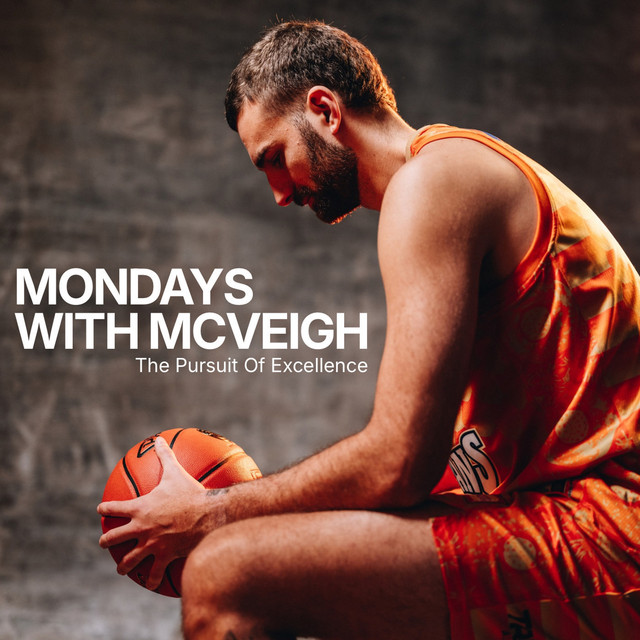
Above my childhood bed was a towering Miami Heat Dwyane Wade poster. He was driving to the basket with so much force his leg was horizontal to the floor. His right hand was scraping the hardwood as he attacked the defender's hip. I wanted to move, glide and dominate like that. Without knowing it, I'd pinned an image above my bed of who I needed to become.
I've never been able to produce as much force or get as low as D-Wade. But I have had moments of feeling unstoppable like him.
My college career high came at home against a ranked Purdue team. They were stacked with talent. My three ball was falling, my drives felt horizontal, and there was no one out there who could stop me. I ended the game with 22 points and a ranked win.
I called my family straight after. I'm going to the NBA, baby.
I floated that whole week. No failed test, no low petrol, no losses in 2K could bring down my mood. I was unstoppable.
UFC world champion Ronda Rousey lived in this space for years.
Transitioning from judo to mixed martial arts, she brought a style of finishing and force that left her unmatched. Her rise was complete dominance. She ended matches in seconds with armbars so precise, so inevitable, that opponents trained specifically to survive them and still lost. She posed for Sports Illustrated. Was named the most dominant athlete alive. Crossed over into movies and television.
Her success didn't just put her on top of the world. It made her feel invincible.
And she loved it. She loved competing. She loved dominating. She loved being champion. This wasn't a sport forced on her. She chose it. She built herself into something the sport had never seen. She was an unstoppable champion.
Ronda reached greater heights in her sport than I have in mine, but success made us feel the same.
This is because our identities had become completely attached to how we performed.
When this attachment to results happens, basketball is no longer just a game. Performance is a reflection of who I am as a human. If I win, it is proof that I am enough. I live on a high. If I lose, its proof that I am a failure. I collapse. I played well against Purdue so I felt incredible all week. My work, my relationships, my entire sense of self was enough, because I had performed.
Psychologist Jennifer Crocker spent decades studying this. She called it contingent self-worth, when a person's sense of value becomes attached to results. Her research found it creates extreme emotional swings. Something deeper than the game is always on the line. And even when you win, the relief is short-lived. The next performance immediately becomes the new test.
Ronda and I both lived in this space, we felt invincible after great results, but when it got bad, it got very bad.
Rousey was defending her world title in front of 60 thousand screaming fans. Her opponent Holly Holm was a significant underdog. Nobody expected it to be close.
In the second round, Holm shifted her weight onto her back foot and swung an explosive kick into the air. All 60 thousand people heard the crack of bone on bone. Like an arrow hitting red, the kick landed on Rondas jaw. She slammed against the floor, before she could catch herself. The fight was over.
The image of Ronda face down on the canvas became one of the most shared sports photographs of that year. Not because people wanted to see her hurt. Because it was genuinely unthinkable. The invincible person was lying on the floor.
Later that night in the hospital, Ronda experienced complete darkness. Asking what the point of everything was. If she wasn't champion, who was she? If she wasn't unbeatable, what was she worth?
She didn't just lose a fight that night. The self she had built her entire life around ceased to exist. And there was nothing underneath it to land on.
The week after Purdue I played Indiana.
Same player. Same body. Same work I'd put in all season.
But this game, I couldn't do anything right. I turned the ball over. I missed shots. Frustration effected me. I was benched in the second half. We lost, and I was horrible.
Complete 180 turn around. Like the Purdue game, the Indiana game effected me entire week. I'd sit in class and find myself replaying missed shots from practice, chest tight, unable to concentrate on anything in front of me. The whole week felt like drowning in slow motion.
Nothing had changed except the result.
But that was enough to bring the whole self down.
Ronda was on top of the world, and with one leg kick, who she was, an invincible champion crumbled to the ground. Losing changed how she viewed herself. If she isn’t the world champ, she is nothing, worthless, and not good enough to continue. Ronda contemplating taking her life. Thankfully she didn’t. But she did retire from UFC after one more fight.
She reached out for help, and slowly she built a new identity. Not through fighting her way back to the title, though she tried. Through building a life wide enough that no single result could collapse it. She created a loving relationship that knew her outside of being champion. She became a mum, found WWE. She built things that couldn't be taken by a head kick.
She didn't stop competing. She stopped making competition the only thing she was.
I'm still in the middle of that same work.
Last week we won a big home game. The boys pulled out the bongo drums in the locker room. We danced. I watched some highlights before bed and felt every bit of it.
Then the morning came.
I woke up and chose the routine. Not because the win didn't matter. Because I know what happens when I let it become the whole thing.
The feeling still flickers. Some mornings the scoreboard is still whispering.
I'm just getting better at hearing it for what it is.