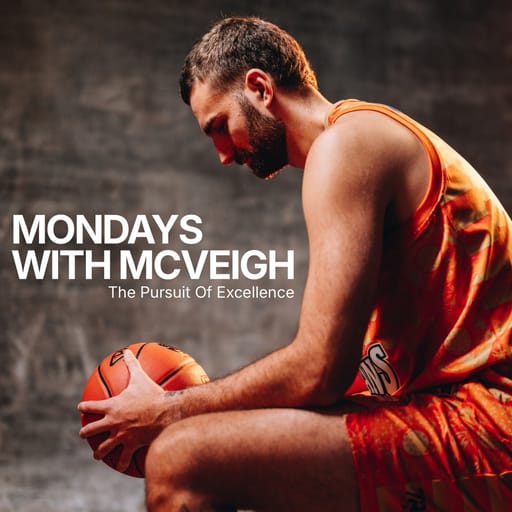
Transcript 0:00 Last week, I scored 47 points, a career high. Growing up, all I ever dreamed about was getting buckets, making tough shots, that feeling of being unstoppable. 0:14 Man, I'll never forget, I replayed this one Michael Jordan game tape I had, and he scored 69 points, and all I ever wished for was that I could like shoot like him, move like him, get buckets like him. 0:27 I remember sitting in a college math class watching Chris Goulding drop 50, and I was shook. It felt like mythical, like something reserved for a different level of player. So standing there after the game 0:43 with the big jumbotron, the stat sheet, seeing 47, a win, the feeling was surreal. To score at the NBL1 level, the NBL level, the NBA, like just that professional basketball level, 0:59 not only does it take thousands of hours in the gym, it takes a certain level of skill, certain level of physical power, like you have to work on your body. 1:09 And then game tape after game tape, this high level of basketball IQ, like getting buckets is not easy. To get, to score two points, to be on the floor at the NBL level is not an easy task. 1:20 But to score 47, like that requires a little something else. Call it luck or magic. Well, five days before the game, my first child was born, and the commentators call it the dad game. 1:36 Last year, Luka Dončić had a 40-point triple-double in his first game as a father. So I started wondering, was there something to that, some kind of magic that helped me get 47 points, or was it something deeper? 1:51 Flow state. Sports psychologists would call what I experienced in that game flow state. The clearest voice on flow is a name I can't pronounce, Mihaly something, something, something. 2:07 [laughs] He's a psychologist who spent decades studying moments when people perform at their absolute best. 2:16 He describes flow state in simple terms as action and awareness merged, self-consciousness disappears, time distorts, the task feels effortless, but at the same time, it's fully demanding. 2:33 You're not thinking about outcomes. You're not narrating to yourself. You're not judging each moment. You're just doing. You're being. 2:45 He also found a consistent conditions that, uh, help make flow more likely or, or the situations in which they occur. One is the challenge matches the skill. It's not too easy, not overwhelming. It's right on that edge. 3:04 Two, you have clear goals. You know the task moment by moment, what you're trying to achieve. Three, you get immediate feedback. You feel instantly what works and what doesn't. And then four, 3:18 deep presence, attention that's anchored in the now. It's not drifting backward or forward. Because what's interesting about flow is it's not something you can summon. It has to be something that you allow. 3:33 That night, for me, the game slowed down. Shots let go without hesitation. My reads appeared early. The rim became an ocean. I could like... It just felt unstoppable, that feeling. 3:51 But I wasn't trying to score 47. I was just responding to what was in front of me. That's pure flow. But why did it occur that night? Well, a week earlier, my w- my wife went into a 36-hour labor. 4:10 And during that time, the outside world disappeared. There was no phones, no noise, no distractions, just the two of us in a room. 4:20 I watched her show courage, patience, and grit, the kind of qualities people try to learn from, from books, but rarely experience firsthand. And she brought life into the world. Our son arrived. 4:33 For days after, we did almost nothing. There was no TV, there was no music, and there definitely wasn't no scrolling. From 7:00 PM to midnight, my boy would just lay on my chest. He'd breathe. I would match it, 4:50 slow, steady, quiet, while my wife slept next to me. We just were. We were just being. There was no agenda, no improvement plan, no performance goals. 5:06 It was just presence without effort. I'd spent more time in true, untorru- interrupted presence that week than I had in years. And presence is the doorway to flow. 5:25 But there's a practice behind that moment as well. For the past five years, I've practiced mindfulness almost every morning, 10 to 15 minutes sitting, watching my breath, not controlling it, just noticing. 5:41 That practice, that daily work trains me to come back, back from replaying past mistakes, back from worrying about future ones. I wouldn't be able to perform at the level I do without it because 5:57 flow requires attention, attention requires presence, and presence requires practice. The past week, presence wasn't just a practice, it was my life. And maybe, just maybe, 6:14 that's why the game opened up and slowed down the way it did. But what's the real lesson in all this, from dads to 47-point games to some guy's name I can't pronounce? It's that flow isn't about being hyped. 6:30 It isn't about confidence. It isn't about emotion. It's about quiet alignment, mind on the task, body ready, ego offline. The fastest way there isn't by doing more. 6:46 It's by being still long enough for everything unnecessary to fall away. This week reminded me of that. And if there's one thing I'll keep chasing, it isn't nights like 47 points. It's the stillness where I find peace. 7:06 I appreciate you guys for tuning in. I hope you have a great week. Thanks for listening to Mondays with McVay. Let's keep chasing, hunting those dreams, and pursuing excellence. Appreciate you guys